
WHAT IS AIA?
The American Institute of Architects (AIA) is the largest, most influential network of architects and design professionals. That’s 98,000+ members who share a passion for design, a desire to change the world, and a commitment to the highest standards of practice. What started as 13 architects in a New York office in 1857 has grown to a 98,000+ global member community that shares a passion for design, a desire to change the world, and a commitment to the highest standards of practice.

We don’t follow the standards, we set them. We’re a force for positive change. And together, with our members, we’re designing a better world, for everyone.
AIA MARIANAS
Established in 1971, the Guam and Saipan component of The American Institute of Architects (AIA) represents the area’s membership of licensed architects, interns and affiliates. In 2022, we formally became AIA Marianas, comprising of 46 members and counting. AIA Marianas works with our local island community to provide expertise, outreach and education to highlight the profession of architecture here at home.






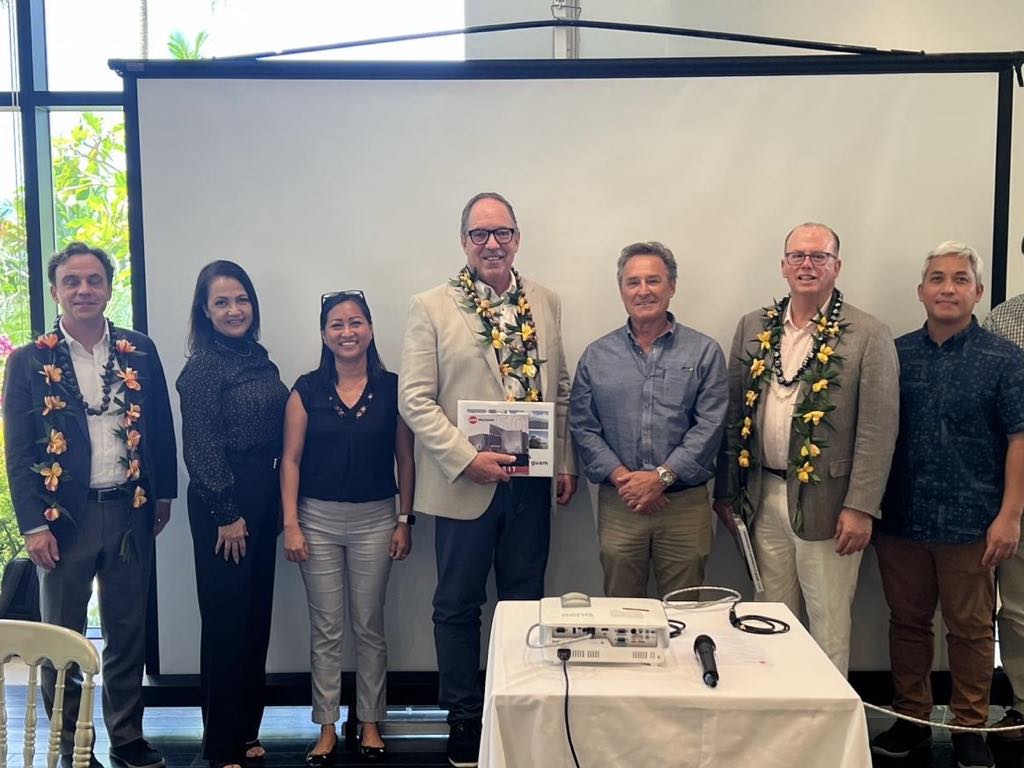



Our mission is to promote the value of an architect, design healthy, sustainable and equitable communities and preserve the island’s cultural heritage.
GUAM
Guam is the westernmost possession of the United States organized as an unincorporated territory with an established civilian government. It is the largest and southernmost island of the Mariana Islands archipelago located in the western Pacific Ocean. Guam is also the largest island in Micronesia.
Guam lies between 13.2°N and 13.7°N and between 144.6°E and 145.0°E, and has an area of 209 square miles. It is approximately 6,000 miles west of San Francisco; 3,700 miles west-southwest of Honolulu; 1,500 miles southeast of Tokyo; 2,100 miles southeast of Hong Kong; 1,500 miles east of Manila; and 3,100 miles northwest of Sydney.
The Marianas Trench, a subduction zone with the deepest known ocean depth, lies beside the Mariana Islands chain to the east. The island experiences occasional earthquakes with magnitudes ranging from 5.0 to 8.7 in recent years.
The climate is characterized as tropical marine. Tropical storms and typhoons pass near the islands. In December 2002, Super Typhoon Pongsona, with sustained winds of 125 mph, hit the island leaving massive destruction.
The island’s capital is Hagåtña (formerly Agana) in the central region. The population of Guam was 154,805 (US Census 2000), and is most dense in the northern and central regions. The largest ethnic group is the native Chamorros. The official languages of the island are English and Chamorro. Guam’s economy is mainly supported by tourism (primarily from Japan) and US military bases.
Guam Building Codes: IBC 2009 (Effective date: Dec. 16, 2009). Basic Wind Speed 170mph. Seismic Zone 4
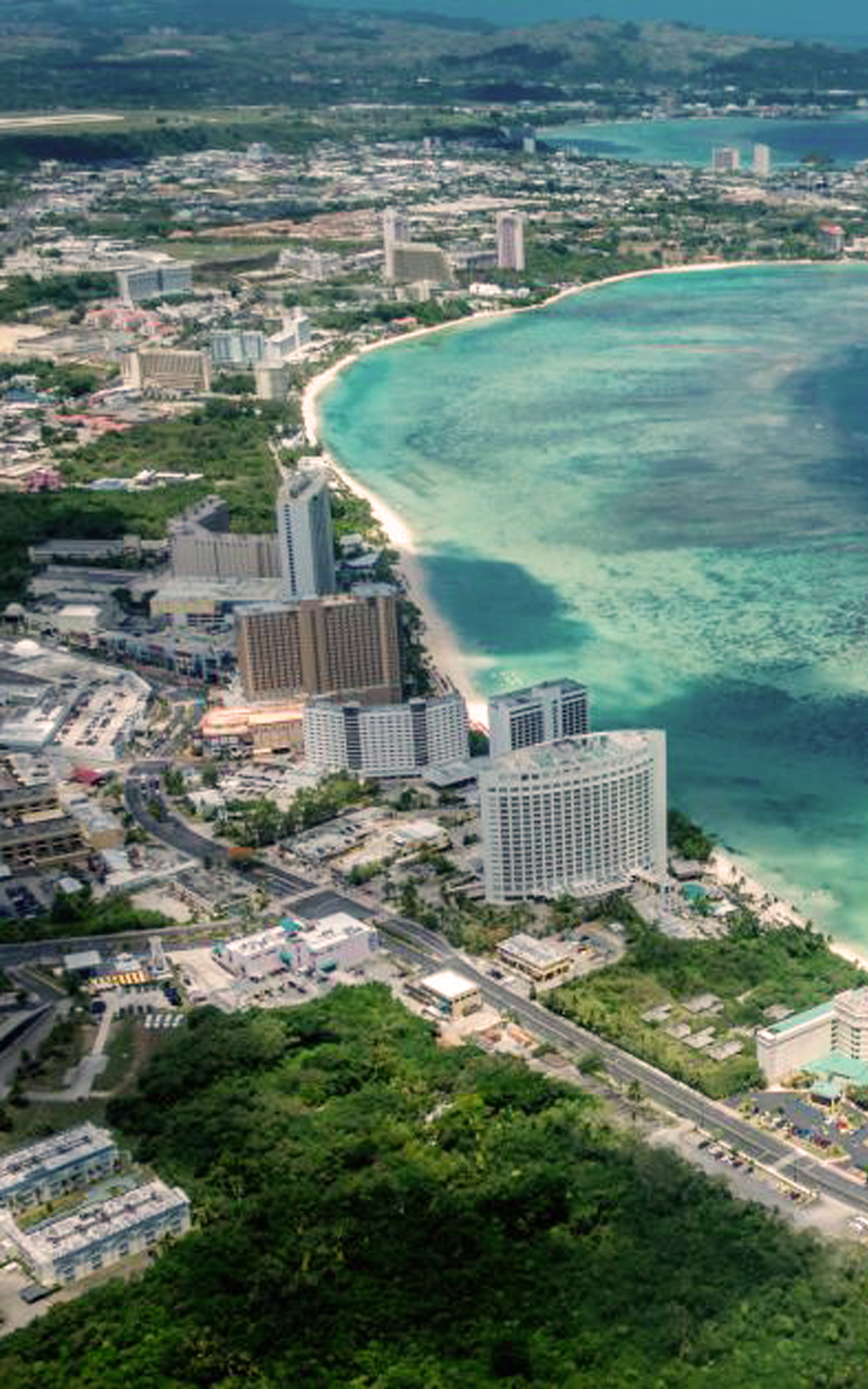
SAIPAN
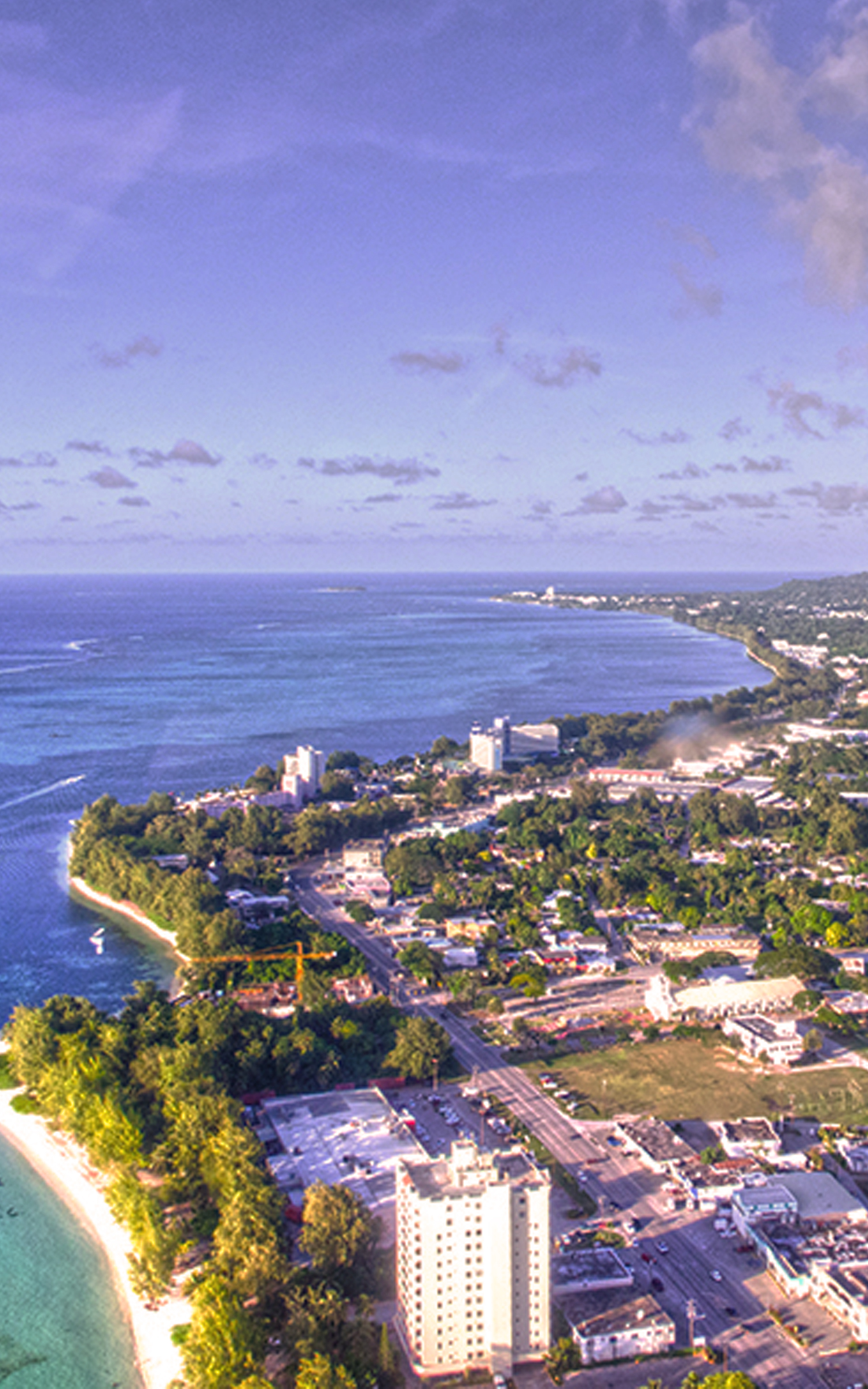
The Commonwealth of the Northern Mariana Islands (CNMI), consists of fifteen islands along the Marianas Trench in the western Pacific Ocean, north of the island of Guam. It is a commonwealth in political union with the United States since 1978.
Saipan is the largest island and capital of the CNMI, located approximately 120 miles north of Guam. Other principal islands include Tinian and Rota. Tinian is about 5 miles southwest of Saipan across the Saipan Channel, and its casino resort development attract tourism from Asia. Rota is the southernmost island of the archipelago. These three municipalities have seaports and international airports, and are the only permanently populated islands.
The string of northernmost islands form the Northern Islands Municipality, which have been largely evacuated due to volcanic threat. Occasional earthquakes are experienced on all islands.
The climate is characterized as tropical marine, moderated by seasonal northeast trade winds. Tropical storms, typhoons and super typhoons pass near the islands.
CNMI has a population of 69,221 (US Census 2000). The official languages are English and Chamorro. After the demise of the garment manufacturing industry in the mid-2000’s, the economy relies on tourism, mainly from Japan, followed by Korea, China and Russia.
CNMI Building Codes: IBC 2018. Design Wind Load 190mph. Seismic Zone 4
 AIA Marianas